

How Long-Term Care and Chronic Illness Riders Work with Life Insurance and Annuities
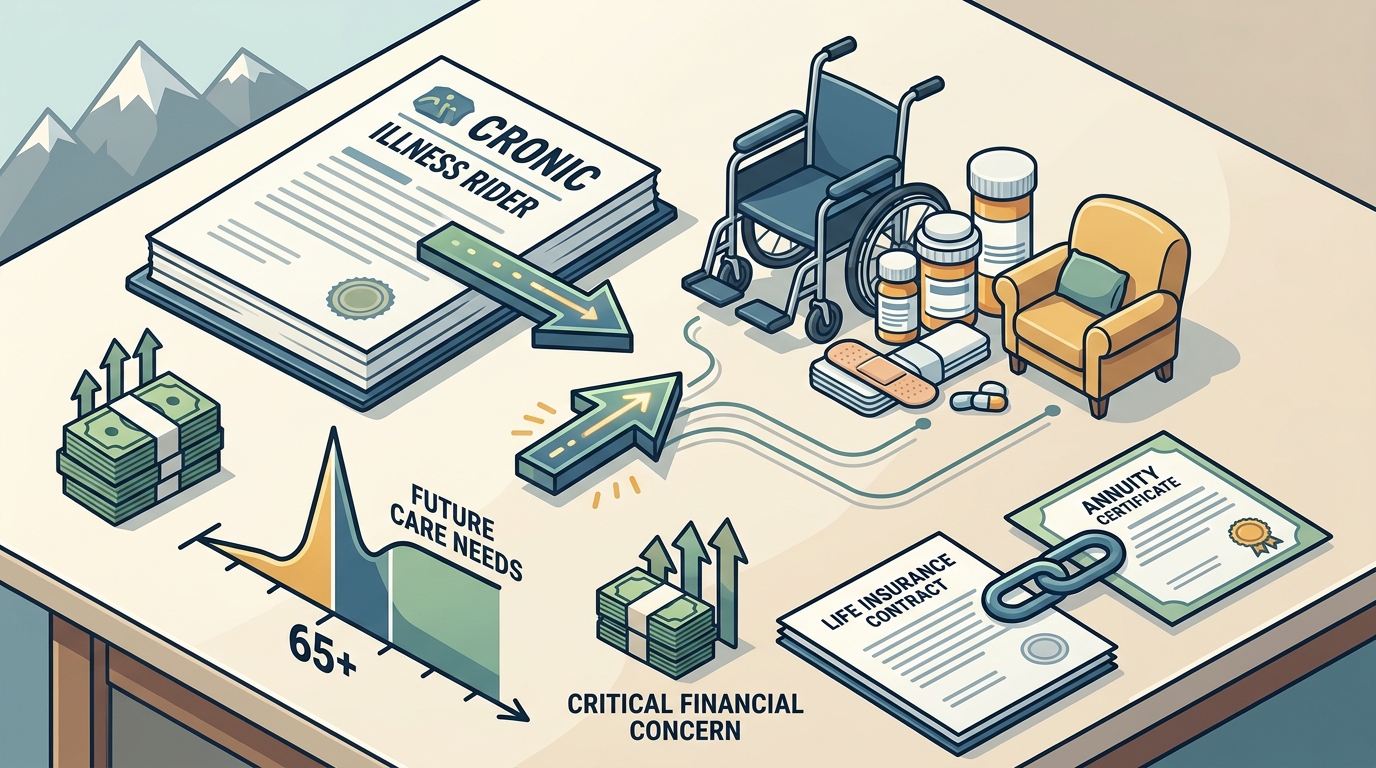
Access to affordable long-term care is a critical financial concern for millions of Americans. According to the U.S. Department of Health and Human Services, approximately 70% of people turning 65 will need some form of long-term care services in their lifetime. This statistic highlights the urgency of integrating protection mechanisms into existing financial portfolios. Riders attached to life insurance policies and annuities offer a sophisticated way to address this risk without purchasing separate, often expensive, standalone policies.
Understanding Accelerated Death Benefit Riders
At its core, a chronic illness rider is a type of accelerated death benefit (ADB) rider. This provision allows the policyholder to access a portion of their death benefit while they are still alive. The primary trigger for this benefit is a diagnosis of a qualifying chronic illness, terminal condition, or the need for long-term care services. The mechanism is designed to provide liquidity during a time when medical costs can rapidly deplete savings.
When a claim is filed, the insurance company pays the requested amount directly to the policyholder or the care provider. This payment reduces the eventual death benefit paid to beneficiaries. It is crucial to understand that this is not a loan in the traditional sense; it is an advance on the death benefit. Therefore, the remaining payout to heirs will be lower by the amount withdrawn plus any accrued interest or fees, depending on the policy terms.
Life Insurance: Term and Permanent Options
Life insurance policies, both term and permanent, can include chronic illness riders. The availability and structure of these riders vary significantly between policy types. For individuals seeking temporary coverage, such as those with a mortgage or young children, a term life policy with a chronic illness rider offers a cost-effective safety net. If the insured develops a qualifying condition, they can access funds to cover home modifications, in-home care, or medical treatments.
Permanent life insurance policies, including whole life and universal life, often come with built-in accelerated death benefit provisions or offer them as optional add-ons. These policies are particularly valuable for long-term care planning because they build cash value. Some policies allow for living benefit riders that provide early access to the death benefit upon diagnosis of a chronic condition. This feature is distinct from standard cash value withdrawals, which may have tax implications or reduce the policy's death benefit differently.
For pre-retirees and retirees, the integration of these riders into a broader estate plan is strategic. It ensures that the policy serves a dual purpose: providing financial support during life if health declines, and leaving a legacy if health remains stable. This dual functionality makes life insurance a versatile tool in the modern financial toolkit.
Annuities: Living Benefits and Income Streams
Annuities are primarily designed to provide guaranteed income streams, but many modern fixed annuities include chronic illness riders. These riders allow the annuitant to access a portion of their principal or accumulated interest if they suffer from a qualifying chronic condition. This feature addresses the fear of outliving one's savings while simultaneously protecting against the high costs of long-term care.
The structure of an annuity chronic illness rider typically allows for a percentage of the account value to be withdrawn tax-free, provided the withdrawal is used for qualified medical expenses. This tax advantage is significant, as it preserves the integrity of the annuity's tax-deferred growth for the remaining balance. It is important to note that the definition of "qualified medical expenses" can vary by insurer and state regulations.
Fixed annuities offer a predictable interest rate and principal protection, making them a stable foundation for adding a chronic illness rider. Unlike variable annuities, which are subject to market risk, fixed annuities provide the certainty needed for long-term care planning. The rider acts as an insurance layer on top of the income guarantee, ensuring that the annuity can adapt to changing health needs without forcing the annuitant to surrender the entire contract.
Comparing Policy Types and Rider Structures
Choosing between life insurance and annuities for long-term care coverage depends on individual goals, budget, and health status. The table below summarizes the key differences in how these riders function across different insurance products.
| Feature | Life Insurance with Chronic Illness Rider | Annuity with Chronic Illness Rider |
|---|---|---|
| Primary Purpose | Death benefit protection with living benefits | Guaranteed income with access to principal |
| Funding Source | Death benefit (reduces payout to heirs) | Account value or principal |
| Tax Implications | Generally tax-free if used for qualified care | May be tax-free if used for qualified care |
| Best For | Those wanting to leave a legacy and protect against care costs | Those prioritizing income security and principal access |
| Flexibility | High, depending on policy type (Term vs. Permanent) | Moderate, tied to annuity payout schedules |
For individuals in Colorado, navigating these options requires understanding local insurance regulations and the specific offerings of independent producers. Working with a licensed professional can help clarify how these riders interact with state-specific Medicaid rules and other public benefits.
Key Takeaways for Financial Planning
- Dual Purpose: Chronic illness riders allow policies to serve both as protection for heirs and as a resource for the insured.
- Qualifying Conditions: Riders typically trigger upon diagnosis of chronic illnesses, terminal conditions, or need for long-term care.
- Reduced Death Benefit: Withdrawals for living benefits reduce the amount paid to beneficiaries upon death.
- Annuity Stability: Fixed annuities offer a stable base for adding chronic illness riders without market risk.
- Tax Advantages: Many withdrawals for qualified medical expenses are tax-free, preserving wealth.
- Independent Advice: Consulting an independent producer ensures comparison of multiple carrier options.
- Early Planning: Adding riders is often easier and more affordable when the insured is younger and healthier.
Frequently Asked Questions
What is a chronic illness rider?
A chronic illness rider is a policy provision that allows the insured to access a portion of their death benefit or annuity value while alive if they are diagnosed with a qualifying chronic condition.
Does a chronic illness rider affect the death benefit?
Yes, any amount withdrawn for living benefits reduces the final death benefit paid to beneficiaries. The reduction is typically equal to the amount withdrawn plus any applicable fees or interest.
Can I use an annuity rider for long-term care?
Yes, many fixed annuities include riders that allow access to principal for qualified long-term care expenses, providing a tax-advantaged source of funds.
Are withdrawals from these riders tax-free?
Withdrawals used for qualified medical expenses are often tax-free, but tax laws vary. It is essential to consult a tax professional to understand specific implications.
How do I qualify for a chronic illness rider benefit?
Qualification typically requires a physician's certification that the insured has a qualifying chronic condition, such as inability to perform activities of daily living or cognitive impairment.
Can I add a rider to an existing policy?
Adding a rider to an existing policy may be possible, but it often requires a new medical underwriting process. It is best to discuss this with your insurance provider.
What is the difference between a term and permanent policy for this purpose?
Term policies offer coverage for a specific period and are generally more affordable, while permanent policies offer lifelong coverage and cash value accumulation, which can enhance long-term care strategies.
Secure Your Financial Future Today
Planning for long-term care is not just about managing risk; it is about preserving your legacy and ensuring your loved ones are protected. Whether you are exploring life insurance options or considering the stability of an annuity, the right strategy can provide peace of mind. Rachel Reynolds, an independent insurance producer, specializes in guiding individuals and families through these complex decisions. With a focus on straightforward solutions, she helps clients identify the protection they need and understand the policy before they apply.
Take the first step toward comprehensive financial security. Request a quote today to explore how life insurance and annuities can be tailored to your unique needs. Visit the About Rachel page to learn more about her approach to insurance guidance. For more detailed information on specific products, explore the Life Insurance and Annuities sections of the website. Connect with Rachel Reynolds to start your personalized consultation.