

Understanding the true cost of life insurance is the first step toward securing your family's financial future. According to recent industry data, the average monthly premium for a healthy 30-year-old male seeking a 20-year term policy is approximately $20 to $30, though this figure varies significantly based on health and coverage amount. This baseline highlights why personalized quotes are essential rather than relying on generic estimates. At Reynolds Insurance Solutions, we believe that transparency in pricing is just as important as the coverage itself. This guide breaks down exactly what drives these costs and how you can optimize your budget without sacrificing protection.
Understanding Life Insurance Premiums
Life insurance premiums are the regular payments you make to keep your policy active. These costs are not arbitrary; they are calculated using actuarial science to predict mortality risk. Term life insurance is a type of coverage that provides protection for a specific period, such as 10, 20, or 30 years. Because the risk of death is statistically lower for younger, healthier individuals, term policies often offer the most affordable entry point for families.
Permanent life insurance, including whole life and universal life, carries higher premiums because the policy never expires and includes a savings component. This component builds cash value over time, which acts as a financial asset. The cost difference between these two primary categories is substantial. Term insurance pays out only if you pass away during the term, while permanent insurance pays out whenever death occurs, provided premiums are paid.
When you request a quote from an independent producer like Rachel Reynolds, the goal is to identify the protection you need and understand the policy before you apply. This ensures that you are not overpaying for coverage you do not need or underinsuring your family. The complexity of the insurance market means that a one-size-fits-all approach rarely works for pricing.
Term vs. Permanent: Cost Differences
Choosing between term and permanent life insurance is often the biggest determinant of your overall cost. Term life is generally the most cost-effective option for temporary needs, such as covering a mortgage or funding children's education. Permanent life insurance is designed for lifelong protection and wealth transfer, but it comes with a higher price tag.
Term Life Insurance Costs
Basic term life offers death-benefit protection for a selected period. It is often an affordable choice for temporary needs and generally does not build cash value. For example, a 40-year-old non-smoker might pay significantly less for a 20-year term than a 50-year-old for the same coverage amount. The cost remains level for the duration of the term, providing predictable budgeting.
Permanent Life Insurance Costs
Whole life insurance provides permanent coverage with scheduled premiums, guaranteed cash value and a guaranteed death benefit when policy requirements are met. Any dividends are not guaranteed. Indexed universal life offers flexible permanent insurance with interest-crediting options linked in part to a market index. While these policies offer more financial flexibility, the premiums are typically five to fifteen times higher than term policies for the same death benefit amount.
Key Factors That Influence Your Rate
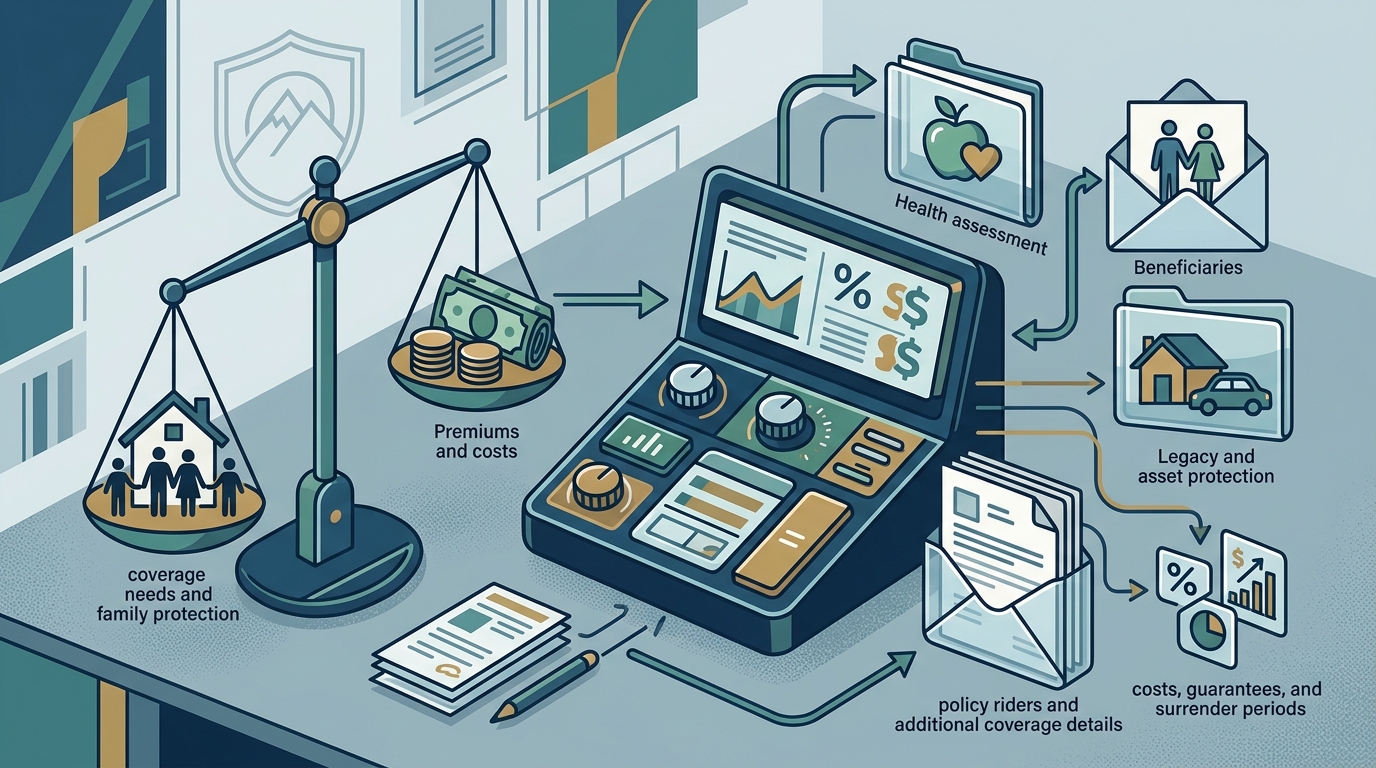
Several variables determine the final premium quote you receive. Understanding these factors allows you to make informed decisions that can lower your costs. Age is the most significant factor. The younger you are when you purchase a policy, the lower your premiums will be. This is because the insurer's risk of paying out the claim is lower.
Health status is the second major driver. Insurers evaluate your medical history, current health conditions, and lifestyle habits. Non-smokers typically receive the best rates. Smokers or those with a history of tobacco use face substantially higher premiums due to increased health risks. Body mass index (BMI) and blood pressure also play roles in this assessment.
Gender is another biological factor. Statistically, women live longer than men, which means insurers face a lower risk of paying out a claim in the near term. Consequently, women often pay lower premiums than men for the same coverage amount and age. Occupation and hobbies also matter. Jobs classified as high-risk or hobbies like skydiving can lead to higher premiums or exclusions.
The True Cost of Riders and Add-Ons
Riders are optional add-ons that customize your policy. While they enhance coverage, they also increase your premium. Living benefit riders allow benefits you may be able to access while living. Certain term and permanent life insurance policies offer riders that may accelerate a portion of the policy's death benefit if you are diagnosed with a qualifying chronic, critical or terminal illness or covered injury.
Common riders include the waiver of premium rider, which waives your premiums if you become disabled, and the accidental death benefit rider, which pays an additional amount if death results from an accident. Each rider adds a specific cost to your monthly bill. It is crucial to weigh the value of these protections against your budget. For many families, the core death benefit is sufficient, and riders may be unnecessary expenses.
Budgeting Strategies for Long-Term Affordability
Effective budgeting for life insurance requires looking beyond the monthly premium. Cash-value life insurance strategies can build flexible policy value for future goals. A properly designed, adequately funded permanent life insurance policy may build cash value that can be accessed through withdrawals and policy loans. This approach is sometimes described as a personal banking or “Bank On Yourself” concept.
College funding flexibility is one such strategy. An overfunded policy may provide a supplemental source of funds for qualified or nonqualified education expenses without the use restrictions that apply to some education accounts. However, this strategy requires careful planning. Policy withdrawals up to basis and loans may provide income-tax-advantaged access to accumulated cash value when the policy is properly structured, funded and kept in force.
It is vital to remember that life insurance is primarily designed to provide a death benefit, not solely as an accumulation vehicle. Cash-value growth is not guaranteed unless specifically stated in the policy. Loans and withdrawals reduce cash value and death benefits, may incur interest and can cause the policy to lapse. A lapse or surrender with an outstanding loan may create taxable income. Favorable tax treatment generally depends on the policy remaining in force and not becoming a modified endowment contract. Consult qualified tax and legal professionals before implementing this strategy.
Key Takeaways
- Age Matters: Purchasing life insurance at a younger age locks in lower premiums for the life of the policy.
- Health Impacts Cost: Maintaining a healthy lifestyle and avoiding tobacco use can significantly reduce your monthly premiums.
- Term vs. Permanent: Term insurance is generally more affordable for temporary needs, while permanent insurance offers lifelong coverage and cash value.
- Riders Add Cost: Living benefit riders and other add-ons increase premiums but provide valuable flexibility for critical illness or disability.
- Cash Value Risks: Accessing cash value through loans or withdrawals reduces the death benefit and may have tax implications if the policy lapses.
- Independent Advice: Working with an independent producer ensures you compare options from multiple carriers to find the best rate.
- Regular Reviews: Your insurance needs change over time. Regularly review your policy to ensure it still aligns with your financial goals.
Frequently Asked Questions
How much life insurance do I actually need?
There is no one-size-fits-all answer, but a common rule of thumb is to have coverage equal to 10 to 12 times your annual income. However, this should be adjusted based on your specific debts, future expenses like college tuition, and the number of dependents. A personalized analysis is the only way to determine the exact amount.
Does my health history affect my life insurance cost?
Yes, your health history is a primary factor in determining your premium. Insurers will review your medical records, including blood pressure, cholesterol levels, and any pre-existing conditions. Pre-existing conditions may lead to higher premiums or exclusions, depending on the severity and management of the condition.
Can I cancel my life insurance policy if I can no longer afford it?
Yes, you can cancel your policy, but the consequences depend on the type of policy. For term life, you simply stop paying premiums, and coverage ends. For permanent life, you may lose the cash value you have accumulated, which could result in a tax liability if the policy is surrendered. It is always better to explore options like reducing the death benefit or switching to a paid-up policy before canceling entirely.
What is the difference between guaranteed and non-guaranteed premiums?
Guaranteed premiums remain fixed for the life of the policy or the term period. Non-guaranteed premiums, often found in universal life policies, can increase over time based on the insurer's performance and interest rates. Guaranteed premiums offer more predictability for budgeting, while non-guaranteed premiums offer more flexibility but carry more risk.
How do living benefit riders work?
Living benefit riders allow you to access a portion of your death benefit while you are still alive if you are diagnosed with a qualifying condition, such as a chronic, critical, or terminal illness. This can help cover medical expenses or other costs associated with your health. The amount accessed is typically subtracted from the final death benefit paid to your beneficiaries.
Is indexed universal life insurance a good investment?
Indexed universal life insurance offers flexible permanent insurance with interest-crediting options linked in part to a market index. It does not invest directly in the index, and credits are subject to policy terms such as caps, participation rates or spreads. It can be a good investment for those seeking tax-advantaged growth and lifelong coverage, but it is complex and requires careful management to ensure it remains in force.
Why is life insurance more expensive for smokers?
Smokers face higher premiums because tobacco use is associated with a higher risk of developing serious health conditions, such as heart disease, lung cancer, and emphysema. This increased risk means insurers are more likely to pay out a claim sooner, so they charge higher premiums to offset that risk.
Get Your Personalized Quote
Understanding the cost of life insurance is the first step toward securing your family's financial future. At Reynolds Insurance Solutions, we provide straightforward life insurance and annuity solutions for individuals, families, pre-retirees, retirees and business owners. Rachel Reynolds, Principal, is an independent insurance producer dedicated to helping you navigate these complex decisions.
Do not leave your family's protection to chance. Request a quote today to explore your options. Whether you need basic term life, permanent coverage, or annuity planning, we are here to help you find the right solution for your budget and goals. Meet Rachel to learn more about our approach to insurance guidance.