

Life insurance is primarily designed to provide a death benefit, not solely as an accumulation vehicle. Yet, many policyholders in Colorado make the critical error of treating permanent life insurance as a primary savings account. According to recent industry data, over 40% of policy lapses occur within the first ten years due to misunderstood cash value mechanics. This statistic highlights a fundamental gap in consumer education regarding the structural differences between term and permanent coverage. Understanding these distinctions is vital for anyone seeking to protect their family's financial future in the Centennial State.
Mistake 1: Ignoring the True Cost of Premiums
One of the most frequent errors when comparing term and permanent life insurance is focusing solely on the initial monthly premium. Term life insurance is often marketed as the affordable choice for temporary needs because it offers death-benefit protection for a selected period, such as 10, 20, or 30 years. However, this affordability is temporary. When the term expires, the policyholder must either renew at a significantly higher rate or purchase a new policy at an older age.
Permanent life insurance, including whole life and universal life, carries higher premiums because it covers the insured for their entire lifetime, provided premiums are paid. The cost includes the insurance protection plus the cash value accumulation component. Consumers often fail to calculate the long-term financial impact of these premiums. They may choose term insurance to save money now, only to find themselves without coverage when they need it most in their later years. This short-term thinking can lead to a coverage gap that leaves loved ones financially vulnerable.
At Reynolds Insurance Solutions, we emphasize that budget alignment is crucial. Rachel Reynolds, a Colorado Life Insurance Producer, helps clients evaluate their budget not just for today, but for the next 20 to 30 years. Understanding the premium structure of different types of life insurance is the first step in avoiding this financial pitfall.
Mistake 2: Overlooking Living Benefit Riders
Many individuals view life insurance strictly as a post-death payout. This narrow perspective causes them to overlook the value of living benefit riders. Living benefit riders are benefits you may be able to access while living. These riders allow policyholders to accelerate a portion of the policy's death benefit if they are diagnosed with a qualifying chronic, critical, or terminal illness.
Term coverage that may include riders allowing early access to part of the death benefit after a qualifying event can be a powerful tool for managing medical expenses or maintaining quality of life. Similarly, permanent policies often have built-in flexibility to access cash value for such needs. Ignoring these features means missing out on a safety net that can provide immediate financial relief during a health crisis.
For example, a living-benefit term policy can provide funds to cover hospice care or experimental treatments. Without this knowledge, a policyholder might exhaust their savings on medical bills, leaving nothing for their family. It is essential to ask your agent about the specific terms and conditions of these riders. Reynolds Insurance Solutions specializes in identifying these options to ensure your policy meets your holistic needs.
Mistake-3">Mistake 3: Misunderstanding Cash Value Growth
A common misconception is that cash value grows at a guaranteed, high rate of return. This misunderstanding leads to unrealistic financial planning. Cash value earns interest under the policy's crediting terms, subject to charges and guarantees. In indexed universal life policies, interest-crediting options are linked in part to a market index. It does not invest directly in the index, and credits are subject to policy terms such as caps, participation rates or spreads.
Whole life policies offer guaranteed cash value growth, but the rates are typically conservative. Universal life policies offer more flexibility but come with more risk. If the underlying investments perform poorly, the cash value may not grow as expected, potentially requiring higher premium payments to keep the policy in force. Consumers often treat this cash value as a liquid savings account, not realizing that withdrawals and policy loans reduce cash value and death benefits, may incur interest and can cause the policy to lapse.
Understanding the mechanics of fixed annuities versus life insurance cash value is also important. While both offer growth potential, their tax treatments and liquidity options differ significantly. Rachel Reynolds provides clear guidance on these complexities, helping clients set realistic expectations for their cash-value life insurance strategies.
Mistake 4: Neglecting Policy Lapse Risks
Policy lapse is the silent killer of financial plans. A lapse occurs when the policyholder fails to pay premiums, and the cash value is insufficient to cover the costs. Favorable tax treatment generally depends on the policy remaining in force and not becoming a modified endowment contract. If a policy lapses with an outstanding loan, it may create taxable income. This unexpected tax bill can be devastating for retirees who were relying on the policy for supplemental retirement income.
Many people assume that permanent life insurance is "set it and forget it." However, universal life policies require active management. The interest rates, mortality charges, and cost of insurance can change over time. If the policy is not adequately funded, it may fail to meet its projected goals. This is why regular policy reviews are essential. Consulting with a qualified professional before implementing any strategy is crucial to avoid these pitfalls.
At Reynolds Insurance Solutions, we conduct annual policy reviews to ensure your coverage remains aligned with your financial goals. We help you understand the income protection aspects of your policy to prevent unintended lapses.
Mistake 5: Failing to Align Coverage with Life Stages
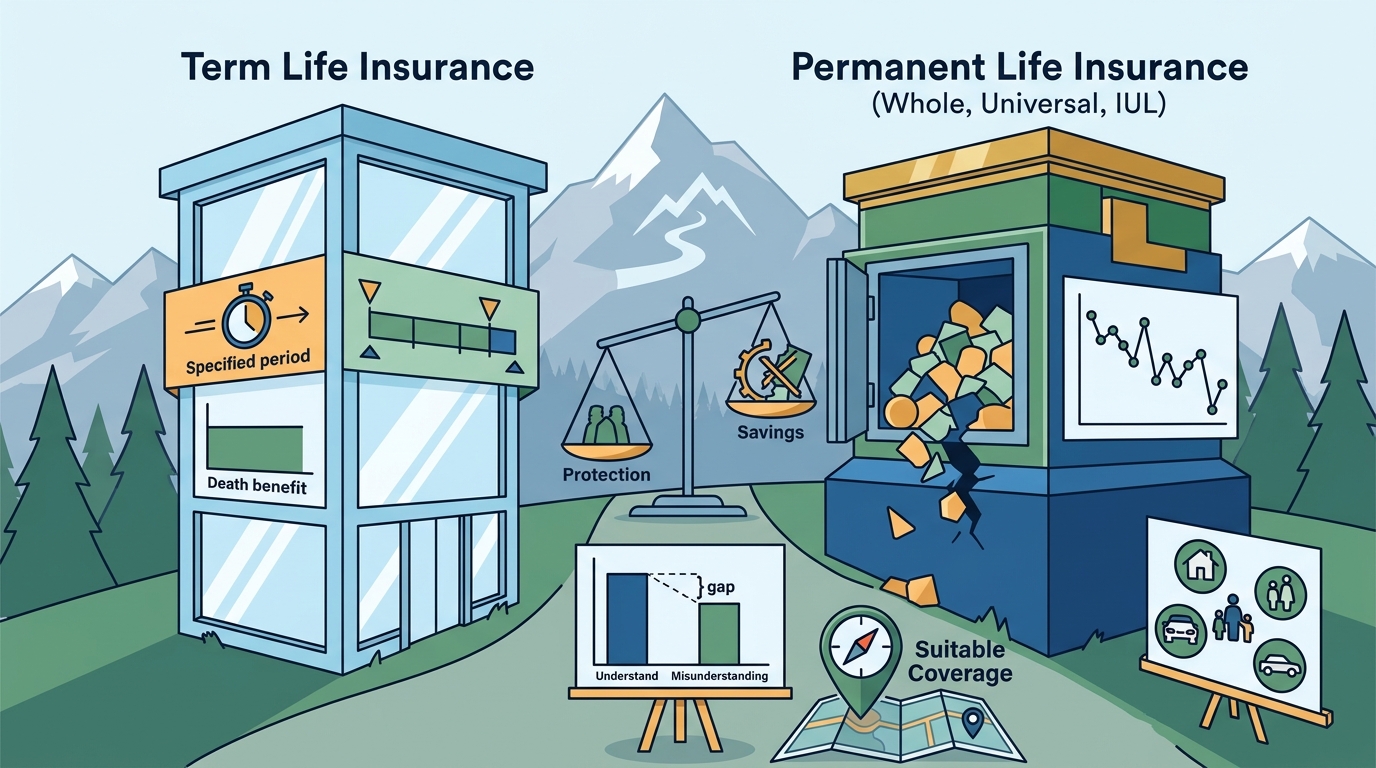
Life insurance needs change as you progress through different life stages. A young family with a mortgage may need high coverage for a short period, making term insurance a logical choice. A retiree with estate planning goals may need permanent insurance to cover estate taxes or provide a legacy. Comparing term and permanent life insurance without considering your current life stage leads to mismatched coverage.
For instance, using permanent insurance to cover a 10-year mortgage may be overkill and unnecessarily expensive. Conversely, relying on term insurance for estate planning can leave your heirs with a tax burden when the term expires. It is vital to match the type of insurance to the specific obligation. Education and legacy planning requires a different approach than mortgage and debt protection.
Rachel Reynolds helps clients navigate these transitions. Whether you are a pre-retiree or a retiree, her independent producer perspective ensures you get unbiased advice tailored to your unique situation. Visit the About Rachel page to learn more about her approach to insurance guidance.
Comparing Term and Permanent Life Insurance
To help you visualize the differences, here is a summary of the key distinctions between term and permanent life insurance options available in Colorado.
| Feature | Term Life Insurance | Permanent Life Insurance |
|---|---|---|
| Coverage Duration | Temporary (10, 20, 30 years) | Lifetime (as long as premiums are paid) |
| Cash Value | Generally none | Builds cash value over time |
| Premium Cost | Lower initial premiums | Higher premiums |
| Flexibility | Limited | High (adjustable premiums/death benefit) |
| Best For | Temporary needs (mortgage, kids' education) | Legacy planning, estate taxes, supplemental income |
Key Takeaways
- Term insurance is affordable but temporary. It is ideal for covering specific, time-bound obligations like a mortgage or children's education.
- Permanent insurance offers lifetime coverage. It includes a cash value component that can serve as a supplemental retirement income source.
- Cash value is not guaranteed. Growth depends on policy type, market conditions, and proper funding.
- Living benefits are available. Riders can provide access to death benefits during a critical illness, offering financial flexibility.
- Lapses have tax consequences. A lapsed policy with a loan can trigger significant taxable income.
- Align coverage with life stages. Your insurance needs at age 30 differ vastly from those at age 65.
- Professional guidance is essential. An independent producer like Rachel Reynolds can help navigate complex policy options.
Frequently Asked Questions
What is the main difference between term and permanent life insurance?
Term life insurance provides coverage for a specific period, such as 10, 20, or 30 years, and generally does not build cash value. Permanent life insurance, including whole life and universal life, provides lifetime coverage and includes a cash value component that grows over time.
Can I access the cash value of my life insurance policy while I am alive?
Yes. A properly designed, adequately funded permanent life insurance policy may build cash value that can be accessed through withdrawals and policy loans. This approach is sometimes described as a personal banking or "Bank On Yourself" concept. However, loans and withdrawals reduce cash value and death benefits.
What happens if my term life insurance policy expires?
When your term life insurance expires, the coverage ends. You may have the option to renew the policy, but the premiums will be significantly higher based on your current age. Alternatively, you may need to purchase a new permanent policy or a new term policy.
Is whole life insurance better than universal life insurance?
Neither is inherently better; it depends on your needs. Whole life offers scheduled premiums and guaranteed cash value. Universal life offers flexible premiums and death-benefit options. Indexed universal life links interest-crediting to a market index, offering potential for higher growth with caps and spreads.
How can I protect my family from medical expenses using life insurance?
You can add living benefit riders to your policy. These riders may allow you to access a portion of the death benefit early if you are diagnosed with a qualifying chronic, critical, or terminal illness. This can help cover medical bills and other expenses while you are still living.
Why is it important to review my life insurance policy annually?
Regular reviews ensure your coverage remains adequate as your life circumstances change. They also help you monitor the performance of cash value components and adjust premiums if necessary to prevent policy lapse. This proactive approach helps maintain the financial security you intended.
What is the role of an independent insurance producer?
An independent insurance producer, like Rachel Reynolds, represents multiple insurance carriers. This allows them to offer unbiased advice and compare options from different companies to find the best fit for your budget and goals. They provide guidance for every stage of life.
Secure Your Family's Future Today
Comparing term and permanent life insurance in Colorado requires careful consideration of your long-term financial goals. Avoid common mistakes by understanding the true costs, benefits, and risks of each option. Whether you need income protection, mortgage coverage, or legacy planning, the right policy can provide confidence for tomorrow.
Take the first step toward securing your family's financial future. Request a life insurance quote from Reynolds Insurance Solutions today. Let Rachel Reynolds help you navigate your options and find the perfect solution for your needs.