

Financial security is no longer just about saving money; it is about protecting the people who rely on your income. According to recent industry data, over 60% of American families lack sufficient life insurance coverage to maintain their current standard of living if the primary earner were to pass away. This gap leaves spouses and children vulnerable to immediate financial instability. The landscape of insurance products has evolved significantly, offering more tailored solutions than ever before. Understanding these options is the first step toward securing your family's future.
Step 1: Assessing Your Coverage Needs
Before selecting a policy, you must determine exactly how much coverage is required. This is not a guesswork exercise. It is a calculation based on your family's financial obligations. The primary goal is to replace lost income and cover final expenses. You must consider ongoing household expenses, mortgage balances, and future education costs for your children.
Term life insurance is often the most affordable choice for temporary needs. It provides a death benefit for a selected period, such as 10, 20, or 30 years. This type of policy is ideal for individuals who want to cover specific debts that will eventually be paid off. For example, a 20-year term policy aligns perfectly with a standard 20-year mortgage. Once the term ends, the coverage expires unless renewed.
Permanent life insurance, on the other hand, offers coverage for your entire lifetime. It is designed for those who want to leave a legacy or cover estate planning needs. The cost is higher, but the guarantee is absolute. You must weigh the immediate budget impact against the long-term security benefits. Rachel Reynolds, Principal at Reynolds Insurance Solutions, emphasizes that the goal is straightforward: identify the protection you need and understand the policy before you apply. Request a life insurance quote to begin this assessment with a professional.
Step 2: Understanding Policy Types
The market offers several distinct categories of life insurance. Each serves a different purpose. Choosing the wrong type can lead to wasted premiums or inadequate coverage. Here is a breakdown of the five main categories.
Basic Term Life
Basic term life provides death-benefit protection for a selected period. It is often an affordable choice for temporary needs. It generally does not build cash value. This makes it pure protection. If you outlive the term, you do not get your money back. However, the low cost allows you to buy more coverage for the same budget.
Living-Benefit Term
Living-benefit term coverage includes riders that allow early access to part of the death benefit. This is crucial if you are diagnosed with a qualifying chronic, critical, or terminal illness. It also covers covered injuries. This rider ensures that you can use the funds for medical bills or lifestyle adjustments while you are still alive. It adds a layer of flexibility to standard term coverage.
Universal Life
Universal life is permanent coverage with flexible premium and death-benefit options. Cash value earns interest under the policy's crediting terms. These terms are subject to charges and guarantees. This type of policy allows you to adjust your premiums as your financial situation changes. It offers more control than whole life but requires more active management.
Whole Life
Whole life is permanent coverage with scheduled premiums. It offers guaranteed cash value and a guaranteed death benefit when policy requirements are met. Any dividends are not guaranteed. This policy is predictable. You know exactly what you will pay and what you will receive. It is a cornerstone of many conservative estate plans.
Indexed Universal Life
Indexed universal life is flexible permanent insurance with interest-crediting options linked in part to a market index. It does not invest directly in the index. Credits are subject to policy terms such as caps, participation rates, or spreads. This option offers potential for higher growth than traditional universal life. However, it carries more complexity and risk.
Step 3: The Role of Cash Value
Cash value is a feature of permanent life insurance policies. It allows your policy to build value over time. This value can be accessed through withdrawals and policy loans. This approach is sometimes described as a personal banking or "Bank On Yourself" concept. It provides a unique financial tool for specific goals.
College Funding Flexibility
An overfunded policy may provide a supplemental source of funds for qualified or nonqualified education expenses. This avoids the use restrictions that apply to some education accounts. Parents can use the cash value to help pay for college without impacting financial aid eligibility as much as other assets. This strategy requires careful planning to ensure the death benefit remains intact.
Supplemental Retirement Income
Policy withdrawals up to basis and loans may provide income-tax-advantaged access to accumulated cash value. This is possible when the policy is properly structured, funded, and kept in force. It serves as a supplemental retirement income stream. This can be particularly useful for bridging gaps in traditional retirement accounts.
However, life insurance is primarily designed to provide a death benefit, not solely as an accumulation vehicle. Cash-value growth is not guaranteed unless specifically stated in the policy. Loans and withdrawals reduce cash value and death benefits. They may also incur interest. A lapse or surrender with an outstanding loan may create taxable income. Favorable tax treatment generally depends on the policy remaining in force. Consult qualified tax and legal professionals before implementing this strategy. Explore annuities and life insurance options to see how they fit your retirement plan.
Step 4: Leveraging Living Benefit Riders
Riders are add-ons to your policy that customize coverage. They allow you to tailor the policy to your specific risks. Living benefit riders are among the most valuable additions. They provide benefits you may be able to access while living.
Certain term and permanent life insurance policies offer riders that may accelerate a portion of the policy's death benefit. This is triggered by a diagnosis of a chronic, critical, or terminal illness. It can also be triggered by a covered injury. This feature ensures that you have financial resources when you need them most. It transforms a policy from a post-death benefit into a living asset.
When evaluating policies, ask about the specific triggers for these riders. Some require a diagnosis from a specialist. Others may have a waiting period. Understanding these details is critical. You want a policy that pays out when you actually need it. Meet Rachel to discuss which riders are appropriate for your health profile and financial goals.
Step 5: Comparing Your Options
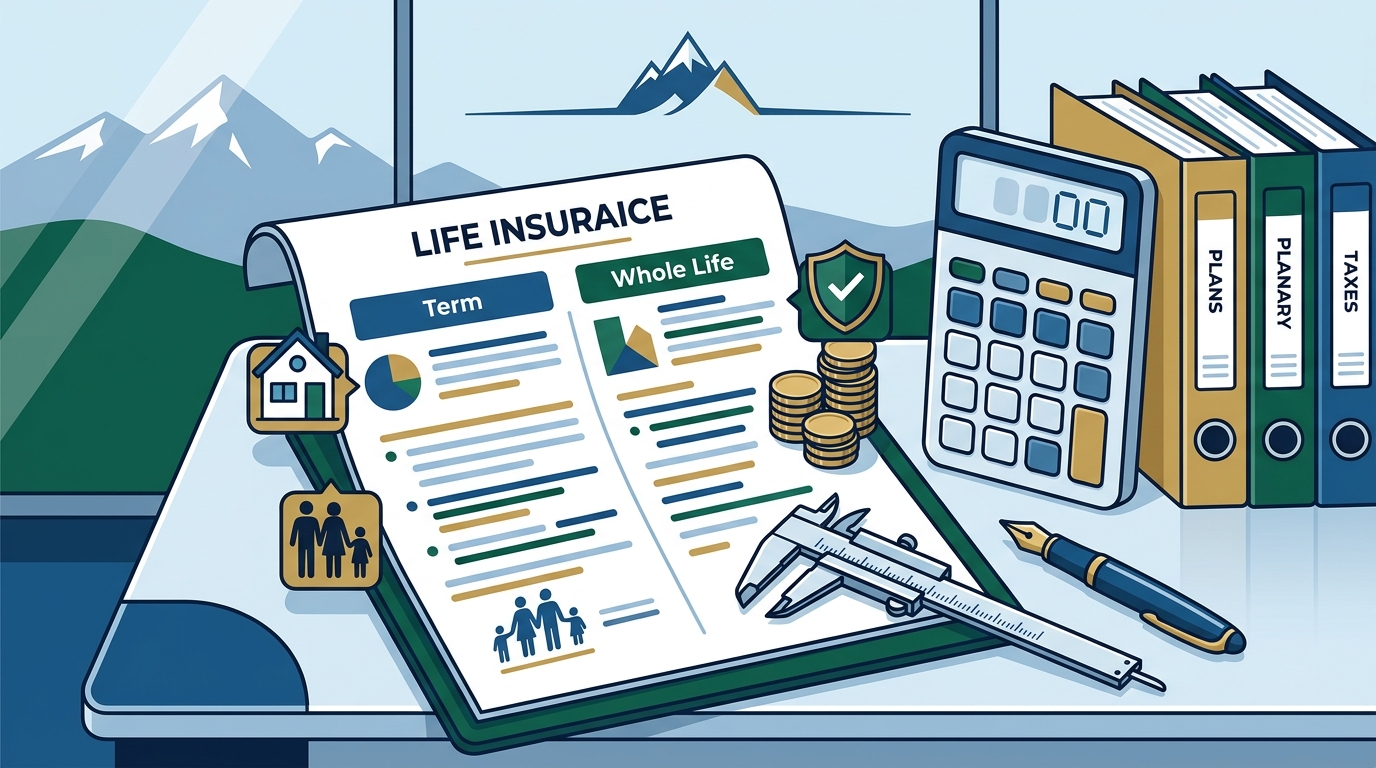
Choosing the right policy requires comparing the features, costs, and benefits of each option. The table below summarizes the key differences between the primary policy types.
| Policy Type | Coverage Duration | Cash Value | Best For | Flexibility |
|---|---|---|---|---|
| Basic Term Life | 10, 20, or 30 years | No | Temporary needs, mortgage coverage | Low |
| Living-Benefit Term | 10, 20, or 30 years | No | Health concerns, critical illness | Medium |
| Universal Life | Lifetime | Yes (Interest-based) | Flexible premiums, estate planning | High |
| Whole Life | Lifetime | Yes (Guaranteed) | Predictable costs, legacy building | Low |
| Indexed Universal Life | Lifetime | Yes (Market-linked) | Growth potential, tax advantages | High |
This comparison highlights the trade-offs between cost, flexibility, and growth potential. Term policies are generally cheaper but offer no long-term value. Permanent policies are more expensive but build equity. Your choice depends on your budget and long-term objectives.
Key Takeaways
- Term life is for temporary needs: It covers specific debts like mortgages or education costs for a set period.
- Permanent life builds cash value: Whole and universal life policies allow you to accumulate funds for future use.
- Riders add critical protection: Living benefit riders allow access to funds during a serious illness.
- Tax implications matter: Loans and withdrawals can have tax consequences if not managed correctly.
- Professional guidance is essential: An independent producer like Rachel Reynolds can help navigate complex policy structures.
- Colorado residents have specific options: Rachel Reynolds holds Colorado Life Insurance Producer License #889392.
- Early planning reduces costs: Locking in rates while young and healthy is financially advantageous.
Frequently Asked Questions
What is the difference between term and whole life insurance?
Term life insurance provides coverage for a specific period, such as 10 to 30 years. It does not build cash value. Whole life insurance provides coverage for your entire lifetime and includes a guaranteed cash value component that grows over time.
Can I access the cash value of my life insurance policy?
Yes, permanent life insurance policies allow access to cash value through withdrawals and policy loans. However, these actions reduce the death benefit and may incur interest. It is important to understand the impact on your policy's longevity.
What are living benefit riders?
Living benefit riders are add-ons that allow you to access a portion of your death benefit while you are still alive. This is typically triggered by a diagnosis of a chronic, critical, or terminal illness.
How much life insurance do I need?
The amount depends on your income, debts, and future financial obligations. A common rule of thumb is 10 to 15 times your annual income. However, a personalized calculation is more accurate. Request a quote for a precise estimate.
Is indexed universal life a good investment?
Indexed universal life offers potential for higher growth linked to a market index. However, it is not a direct investment. Credits are subject to caps and spreads. It is best suited for those seeking tax-advantaged growth with some market participation.
How does Rachel Reynolds help with insurance planning?
As an independent producer, Rachel Reynolds compares options from multiple carriers. She helps identify the protection you need and explains the policy details before you apply. She focuses on straightforward guidance for every stage of life.
What is the "Bank On Yourself" concept?
This concept refers to using a properly designed permanent life insurance policy to build cash value. This value can be accessed for goals like college funding or supplemental retirement income, acting as a personal banking system.
Next Steps
Choosing the right life insurance policy is a critical decision. It requires understanding your needs, the available options, and the long-term implications. Rachel Reynolds and the team at Reynolds Insurance Solutions are here to help. They provide insurance guidance for every stage of life. From protection for today to confidence for tomorrow, they offer straightforward solutions for individuals, families, pre-retirees, retirees, and business owners.
Do not wait until it is too late. Secure your family's financial future today. Contact Reynolds Insurance Solutions to schedule your consultation and take the first step toward peace of mind.