

Common Mistakes When Selecting Life Insurance Living-Benefit Riders
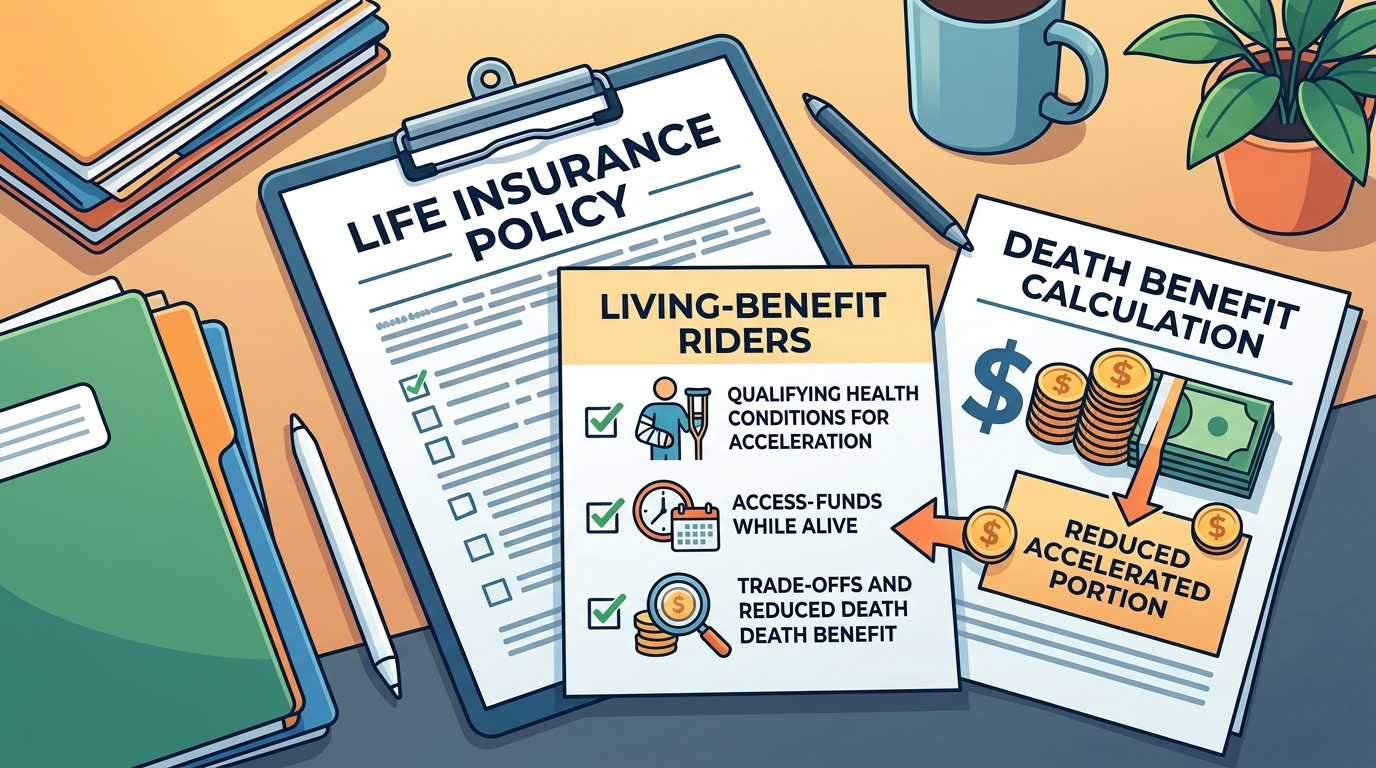
Living-benefit riders, often called accelerated death benefit riders, allow policyholders to access a portion of their death benefit while still alive if they qualify under specific health conditions. According to the Life Insurance Marketing and Research Association, the majority of permanent life insurance policies now include some form of living benefit provision. This shift reflects a growing consumer demand for flexibility in financial planning. However, accessing these funds is not without significant trade-offs. Many individuals overlook the long-term impact on their estate planning goals when they prioritize immediate liquidity. Understanding the mechanics of these riders is essential for making an informed decision that aligns with your broader financial strategy.
Understanding Living-Benefit Riders
Living-benefit riders are add-ons to life insurance policies that provide financial support during a crisis. Accelerated death benefits are payments made to the policyholder before death upon meeting specific criteria. These criteria typically include terminal, critical, or chronic illnesses, or long-term care needs. The primary purpose is to alleviate financial stress during difficult times. This feature transforms a traditional death benefit into a more versatile financial tool. It allows individuals to use funds for medical bills, home modifications, or daily living expenses. However, this flexibility comes with strict rules and potential downsides that must be carefully evaluated.
Mistake 1: Ignoring the True Cost of Riders
One of the most common errors is assuming that living-benefit riders are free or negligible in cost. While some policies include basic accelerated death benefits at no extra charge, more comprehensive riders often come with additional premiums. These costs can vary significantly based on the insurer and the specific benefits offered. Failing to account for these premiums can strain your budget over time. It is crucial to compare the cost of the rider against the potential benefit. If the cost outweighs the likelihood of needing the benefit, it may not be a wise investment. Always request a detailed breakdown of rider costs from your agent.
Mistake 2: Misunderstanding Qualifying Conditions
Another critical mistake is assuming that any health issue qualifies for a living benefit. Qualifying conditions are specific health events defined in the policy contract. These typically include terminal illness with a limited life expectancy, critical illness such as cancer or heart attack, or chronic illness requiring long-term care. Some policies may exclude certain pre-existing conditions or require a waiting period. It is essential to read the fine print to understand exactly what triggers the benefit. Do not rely on general descriptions or agent summaries. Verify the specific definitions with the insurance company. Misunderstanding these conditions can lead to denied claims and financial disappointment.
Mistake 3: Underestimating Cash Value Impact
For permanent life insurance policies, living benefits are often paid from the cash value. Withdrawing or borrowing against this value reduces the policy's overall strength. This reduction can impact the policy's ability to pay the full death benefit later. It can also affect the policy's performance, especially in indexed universal life policies. If the cash value drops too low, the policy may lapse, resulting in loss of coverage and potential tax consequences. Many individuals fail to calculate the long-term impact of early withdrawals. It is vital to model different scenarios to understand how living benefits will affect the policy's future value. Consult with a financial advisor to assess the trade-offs.
Mistake 4: Overlooking Tax Implications
Tax treatment of living benefits is complex and often misunderstood. Generally, accelerated death benefits are tax-free up to the amount of the death benefit. However, there are exceptions. If the benefit is paid out due to a chronic illness, it may be tax-free under certain conditions. But if the policy is modified or surrendered, tax implications can arise. Additionally, if the policy becomes a Modified Endowment Contract (MEC), withdrawals may be taxed on a LIFO basis. Many individuals assume all life insurance proceeds are tax-free, which is not always true for living benefits. It is crucial to consult a tax professional before accessing these funds. Understanding the tax code is essential for preserving wealth.
Mistake 5: Risking Policy Lapse
Perhaps the most dangerous mistake is allowing the policy to lapse due to insufficient funding. When living benefits are accessed, the cash value decreases. If the remaining value is not enough to cover policy costs, the policy may lapse. A lapse results in the loss of coverage and potentially significant tax bills. This outcome defeats the purpose of having life insurance in the first place. To avoid this, it is essential to monitor the policy regularly. Ensure that sufficient premiums are paid to keep the policy in force. Consider overfunding the policy initially to create a buffer. Regular reviews with your agent can help prevent unexpected lapses.
Key Takeaways
- Cost Awareness: Always verify if living-benefit riders incur additional premiums or fees.
- Specific Triggers: Understand the exact medical conditions required to qualify for benefits.
- Cash Value Impact: Recognize that accessing living benefits reduces the policy's death benefit and cash value.
- Tax Complexity: Consult a tax professional to understand potential tax liabilities on accelerated payments.
- Lapse Risk: Monitor policy performance to prevent lapse due to reduced cash value.
- Policy Type Matters: Different policies (Term, Whole, Universal) have different rules for living benefits.
- Professional Guidance: Work with an independent producer like Rachel Reynolds to navigate these complexities.
Frequently Asked Questions
What is a living-benefit rider?
A living-benefit rider is an add-on to a life insurance policy that allows the policyholder to access a portion of the death benefit while alive if they meet specific health criteria.
Are living-benefit riders tax-free?
Generally, accelerated death benefits are tax-free, but there are exceptions depending on the type of illness and how the policy is structured. Consult a tax professional for specific advice.
How does accessing living benefits affect the death benefit?
Accessing living benefits reduces the remaining death benefit. The amount paid out is subtracted from the total coverage, leaving less for beneficiaries.
Can I use living benefits for any purpose?
Yes, most policies do not restrict how you use the funds. You can use them for medical bills, home modifications, or daily expenses.
What happens if my policy lapses?
If your policy lapses, you lose coverage. Additionally, if the cash value exceeds the premiums paid, you may owe income tax on the gain.
Do all life insurance policies have living benefits?
No, not all policies include living benefits. Term life insurance may offer riders, but permanent policies are more likely to have built-in options.
How do I know if I qualify for a living benefit?
Qualification depends on the specific conditions outlined in your policy. Typically, this includes terminal, critical, or chronic illnesses. Review your contract or ask your agent.
Can I add a living-benefit rider to an existing policy?
It depends on the insurer and the policy type. Some companies allow adding riders, while others may require a new policy. Contact your provider for details.
Contact Rachel Reynolds
Navigating the complexities of living-benefit riders requires expert guidance. Rachel Reynolds, an independent insurance producer in Colorado, specializes in helping individuals and families make informed decisions about their life insurance needs. Whether you are considering term, whole, or universal life insurance, Rachel can provide personalized advice tailored to your unique situation. Do not let common mistakes jeopardize your financial security. Contact Rachel today to schedule a consultation and explore your options. Visit Reynolds Insurance Solutions to learn more about her services and request a quote.