

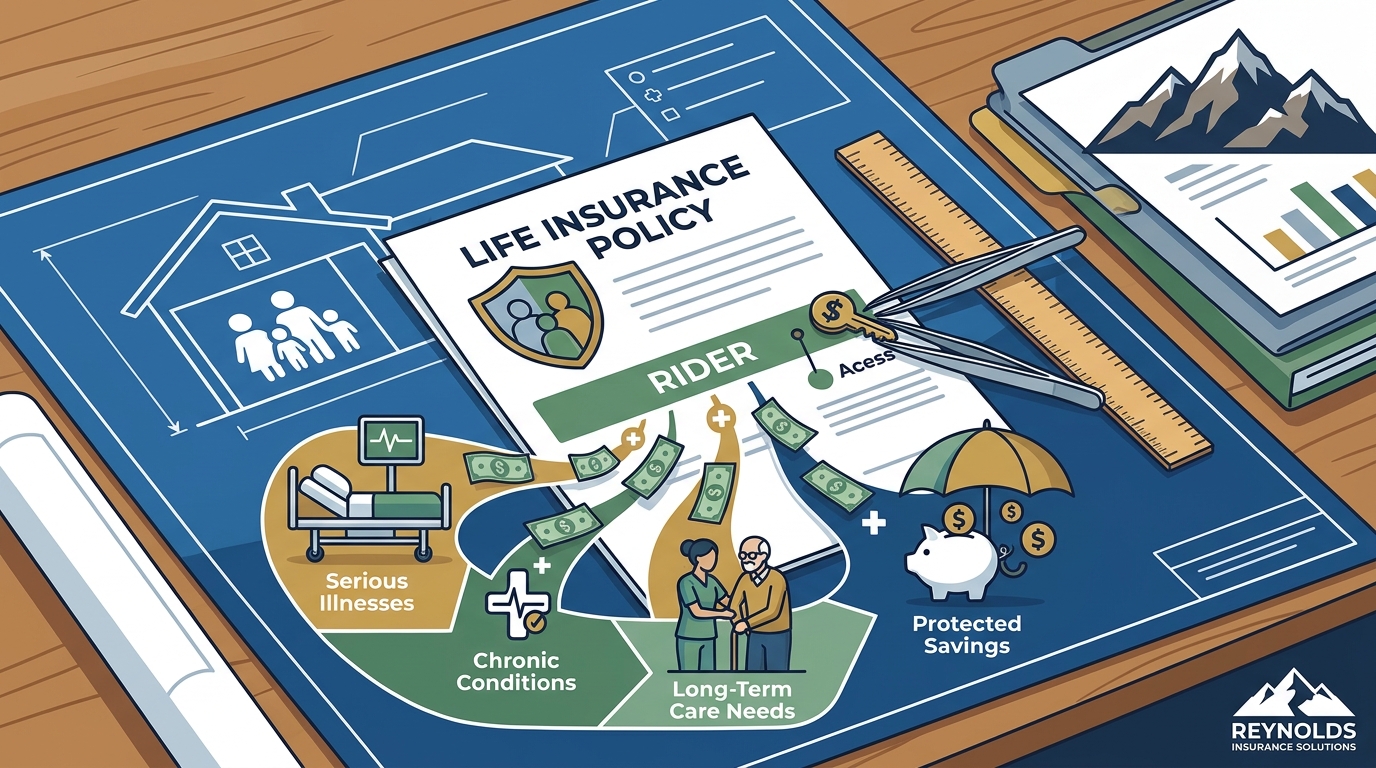
Living benefits riders are optional add-ons to life insurance policies that allow policyholders to access a portion of the death benefit while still alive for specific qualifying events. Colorado families often add these riders to term or permanent policies to create a financial safety net for serious illnesses, chronic conditions, or long-term care needs. This approach helps protect household income and covers medical expenses without depleting savings. Reynolds Insurance Solutions helps individuals and families in Colorado understand how these riders work and whether they fit their specific financial goals.
Defining Living Benefits Riders
A living benefits rider is an optional provision attached to a life insurance policy that permits the insured to receive a portion of the death benefit during their lifetime. This feature is distinct from the standard death benefit, which is paid to beneficiaries only after the insured passes away. When a policyholder qualifies for a living benefit, the amount received is deducted from the total death benefit, meaning the final payout to beneficiaries will be lower.
How the Mechanism Works
The process typically begins when a policyholder is diagnosed with a qualifying condition. The insurance carrier reviews the medical documentation to verify eligibility. If approved, the policyholder can access the funds, which may be paid as a lump sum or in installments. The remaining death benefit is adjusted accordingly. This mechanism provides liquidity during a time when medical bills and lost income can strain a family's finances.
Qualifying Conditions
Most riders cover three primary categories of conditions: critical illness, chronic illness, and terminal illness. Critical illness riders usually cover specific diagnoses such as cancer, heart attack, or stroke. Chronic illness riders apply when a person cannot perform a certain number of basic activities of daily living, such as bathing or dressing. Terminal illness riders allow access to funds when a physician certifies a life expectancy of typically twelve months or less. Each category has specific definitions and requirements outlined in the policy contract.
Why Colorado Families Consider These Riders
Colorado families often face unique financial pressures, including high housing costs and the need for robust healthcare planning. Adding a living benefits rider provides a layer of financial protection that standard life insurance does not offer. It transforms a policy from a pure death benefit tool into a comprehensive health and financial safety net. This is particularly useful for families who may not have substantial emergency savings or who want to avoid taking out high-interest loans to cover medical expenses.
Protecting Household Income
When a primary earner is diagnosed with a serious illness, their ability to work may be severely limited. A living benefits rider can provide funds to replace lost income during the recovery period. This helps families maintain their standard of living and continue paying for essentials like mortgage, utilities, and groceries. For example, a family in Denver might use a critical illness benefit to cover the gap in income while a parent recovers from a heart attack, ensuring that their children's education and activities are not disrupted.
Covering Long-Term Care Costs
Long-term care is one of the most significant financial risks for retirees and pre-retirees in Colorado. A chronic illness rider can help cover the costs of assisted living, home health care, or nursing home care. Without this rider, families might have to sell assets or rely on Medicaid, which has strict asset limits. By accessing a portion of the life insurance death benefit, families can pay for quality care while preserving other assets for their heirs. This is a strategic way to plan for the later stages of life without compromising the estate.
Term vs. Permanent Policies with Living Benefits
Living benefits riders are available on both term and permanent life insurance policies, but they function differently in each context. Term life insurance provides coverage for a specific period, such as 20 or 30 years, and is generally more affordable. Permanent life insurance, such as whole life or universal life, builds cash value over time and lasts for the insured's lifetime. The choice between term and permanent depends on the family's long-term goals and budget.
Term Life with Riders
Adding a living benefits rider to a term policy is a cost-effective way to gain access to funds for serious illnesses. Since term policies are less expensive, families can often afford to add these riders without a significant increase in premiums. However, it is important to note that if the policy expires before the insured passes away, the death benefit is not paid, and any unused living benefits are lost. This makes term policies ideal for covering specific periods of high financial responsibility, such as raising children or paying off a mortgage.
Permanent Life with Riders
Permanent policies offer the advantage of cash value accumulation, which can be borrowed against or withdrawn in some cases. Adding a living benefits rider to a permanent policy provides an additional layer of protection. If the insured qualifies for a living benefit, they can access the death benefit, and the policy continues to provide coverage for the remaining lifetime. This is particularly useful for estate planning and leaving a legacy for heirs. The cash value can also be used to pay premiums, making the policy more sustainable over time.
Cost and Impact on Death Benefits
Evaluating the Premium Increase
Families should carefully evaluate whether the premium increase is justified by the potential benefits. For some, the peace of mind and financial protection are worth the extra cost. For others, the premium increase may be too high relative to their budget. It is important to compare quotes from different carriers and to understand the specific terms of each rider. Some riders may have waiting periods or exclusions that limit when benefits can be accessed. A licensed insurance professional can help analyze these factors and determine the best option for the family's situation.
Impact on Estate Planning
Accessing a living benefit reduces the death benefit, which can impact estate planning goals. If the primary goal is to leave a large inheritance, families should consider how much of the death benefit they are willing to sacrifice for living benefits. In some cases, it may be better to use a separate long-term care insurance policy or to rely on savings for medical expenses, preserving the full death benefit for heirs. This decision depends on the family's overall financial strategy and priorities.
Choosing the Right Rider for Your Needs
Selecting the right living benefits rider requires a thorough assessment of the family's financial situation, health history, and long-term goals. There is no one-size-fits-all solution. Some families may prioritize critical illness coverage, while others may focus on chronic illness or terminal illness benefits. The choice should align with the family's risk tolerance and financial resilience.
Assessing Health and Family History
Family history of certain diseases can influence the decision to add a living benefits rider. If there is a strong history of cancer or heart disease, a critical illness rider may be particularly valuable. Similarly, if there is a history of dementia or Alzheimer's, a chronic illness rider may be more relevant. Understanding these risks helps families make informed decisions about which riders to include. It is also important to consider the insured's current health status, as some riders may have underwriting requirements that affect eligibility.
Aligning with Financial Goals
The decision to add a living benefits rider should be part of a broader financial plan. Families should consider their emergency savings, investment portfolio, and other insurance coverage. If they have substantial savings, they may not need to access a living benefit for minor medical expenses. However, for major illnesses, the rider can provide a crucial financial buffer. Aligning the rider with overall financial goals ensures that it serves its intended purpose without creating unnecessary financial strain.
Key Takeaways
- A living benefits rider is an optional add-on that allows policyholders to access a portion of the death benefit for qualifying conditions.
- These riders typically cover critical illness, chronic illness, and terminal illness, each with specific definitions and requirements.
- Colorado families often add these riders to protect household income and cover long-term care costs without depleting savings.
- Term policies with riders are cost-effective for covering specific periods of financial responsibility, while permanent policies offer lifelong coverage and cash value.
- Accessing a living benefit permanently reduces the death benefit, so families should carefully evaluate the impact on their estate planning goals.
- The cost of riders varies by carrier and individual factors, so it is important to compare quotes and understand the terms.
- Choosing the right rider depends on family health history, financial situation, and long-term goals.
Frequently Asked Questions
What is a living benefits rider?
A living benefits rider is an optional provision attached to a life insurance policy that allows the insured to receive a portion of the death benefit while still alive for specific qualifying events, such as critical illness, chronic illness, or terminal illness.
How does a living benefits rider affect the death benefit?
When a policyholder accesses a living benefit, the amount received is deducted from the total death benefit. This means the final payout to beneficiaries will be lower by the amount of the living benefit accessed.
Are living benefits riders available on term life insurance?
Yes, living benefits riders are available on both term and permanent life insurance policies. On term policies, the rider provides access to funds for qualifying conditions during the term period.
What conditions qualify for a living benefit?
Qualifying conditions typically include critical illnesses like cancer or heart attack, chronic illnesses where the person cannot perform basic activities of daily living, and terminal illnesses with a life expectancy of twelve months or less.
How much does a living benefits rider cost?
The cost of a living benefits rider varies based on the type of rider, the amount of coverage, and the insured's health and age. It is usually an additional premium cost on top of the base policy premium.
Can I add a living benefits rider to an existing policy?
In some cases, it may be possible to add a living benefits rider to an existing policy, but this depends on the carrier and the policy's terms. It is best to consult with an insurance professional to determine eligibility.
Do living benefits riders have waiting periods?
Some riders may have waiting periods or exclusions that limit when benefits can be accessed. It is important to review the policy contract to understand any such limitations.
Next Steps for Your Family
Understanding living benefits riders is a crucial step in building a comprehensive financial protection plan. By evaluating your family's needs, health history, and financial goals, you can determine whether adding a rider to your life insurance policy is the right choice. Reynolds Insurance Solutions provides straightforward guidance for individuals, families, and business owners in Colorado, helping you make informed decisions about life insurance and annuities. To discuss how living benefits riders might fit into your financial plan, for a personalized consultation.