

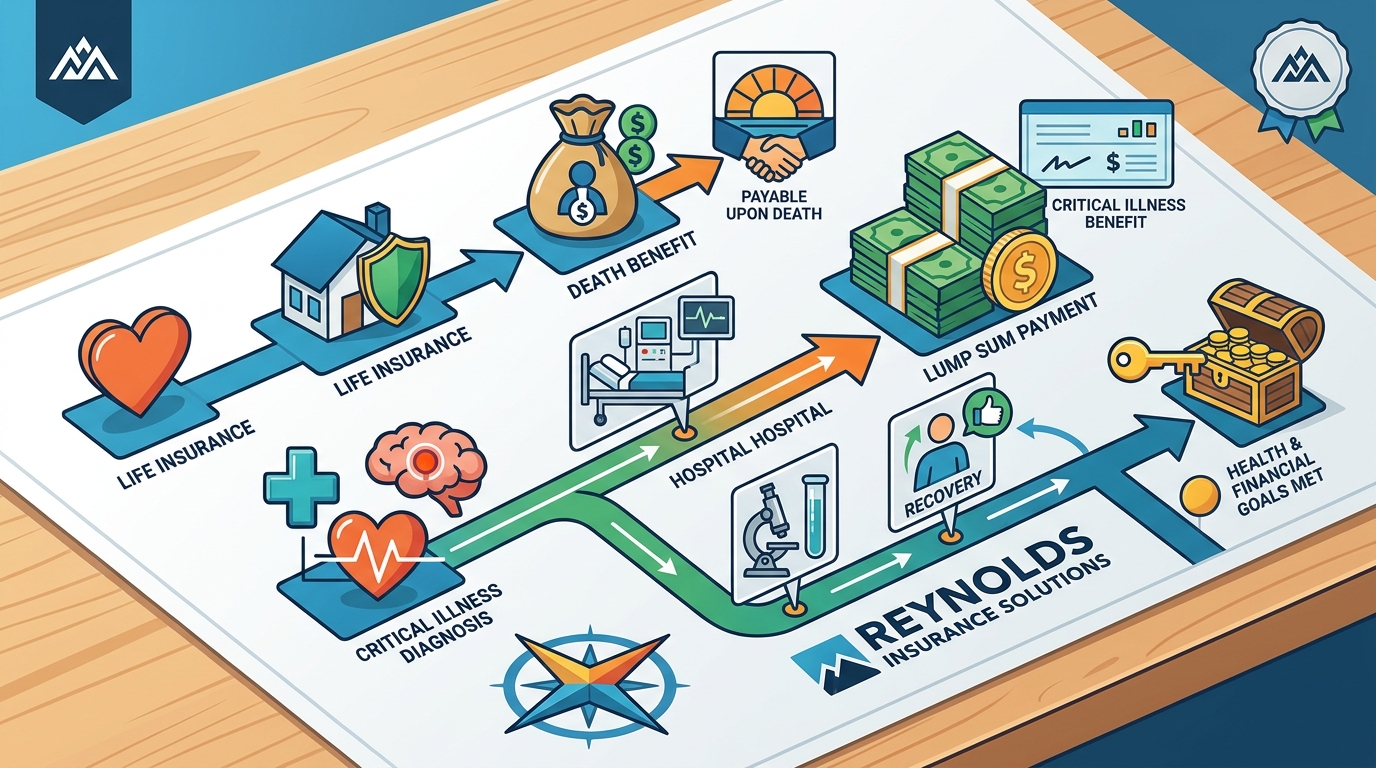
Critical illness coverage is a specific type of insurance benefit that pays a lump sum if you are diagnosed with a covered condition. It is distinct from standard life insurance, which pays a death benefit to your beneficiaries. Understanding this difference is essential before you purchase a policy, as critical illness riders or standalone policies serve a different financial purpose. At Reynolds Insurance Solutions, we help clients navigate these options to ensure their protection aligns with their specific health and financial goals.
Defining Critical Illness Coverage
Standalone vs. Rider
You can obtain this coverage in two primary ways. A standalone policy is a separate contract that pays out upon diagnosis. A rider is an add-on to an existing life insurance policy. Riders are often more affordable but may have lower benefit amounts. Standalone policies offer more flexibility in benefit size but come with a separate premium. For additional details, review the About.
How the Lump Sum Benefit Works
The primary advantage of critical illness coverage is financial flexibility. When a qualifying diagnosis is made, the insurer pays the benefit amount directly to you. You are not required to provide receipts for medical expenses. This allows you to use the funds to cover lost income, pay off a mortgage, or hire in-home care. For example, if a client is diagnosed with a covered cancer and cannot work, the benefit can replace lost wages while they focus on treatment.
Tax Implications
In many jurisdictions, critical illness benefits are received income-tax-free. However, tax laws vary by state and individual circumstance. It is important to consult with a tax professional to understand how the payout may affect your overall tax situation. Reynolds Insurance Solutions can help you understand the general structure, but we always recommend professional tax advice for specific planning.
Underwriting and Eligibility Requirements
Obtaining critical illness coverage requires underwriting, which is the process of assessing your health risk. Insurers will review your medical history, family history, and lifestyle factors. Pre-existing conditions may be excluded or may result in higher premiums. If you have a history of heart disease, for instance, a heart attack rider might be excluded. It is vital to disclose all health information accurately to avoid claim denials later.
Waiting Periods
Most policies include a waiting period, often 30 to 90 days, before coverage becomes active. This prevents people from buying insurance after they already know they are sick. Additionally, some policies have a survival requirement, meaning you must survive a certain number of days after diagnosis to receive the benefit. These terms are critical to understand before signing a contract.
Cost Considerations and Premiums
The cost of critical illness coverage depends on several factors, including your age, health, benefit amount, and the type of coverage. Standalone policies typically cost more than riders. Premiums can be paid monthly or annually. It is important to budget for these premiums over the long term. If you choose a rider, the cost is added to your life insurance premium. At Reynolds Insurance Solutions, we compare options from multiple carriers to find a balance between cost and coverage.
Impact on Life Insurance
Adding a critical illness rider may affect the underwriting of your life insurance policy. If you have a pre-existing condition, the life insurance carrier might adjust your rating class. This could increase your life insurance premium. It is wise to get quotes for both standalone and rider options to see which is more cost-effective for your specific health profile.
Making the Right Decision for Your Family
Deciding whether to add critical illness coverage depends on your financial resilience. If you have substantial savings and a robust health insurance plan, you may not need this coverage. However, if you are a primary breadwinner with significant debts, this coverage can provide a safety net. It is not a one-size-fits-all solution. We encourage clients to evaluate their income replacement needs and debt obligations. A licensed producer can help you determine if this coverage fits your overall financial plan.
Reviewing Policy Exclusions
Every policy has exclusions. These are conditions or situations that are not covered. For example, illnesses contracted before the policy start date are typically excluded. It is essential to read the exclusions section carefully. Do not assume that all serious illnesses are covered. The specific list of covered conditions is the most important part of the contract.
Key Takeaways
- Critical illness coverage pays a lump sum upon diagnosis of a covered condition, unlike life insurance which pays upon death.
- You can buy this coverage as a standalone policy or as a rider attached to a life insurance policy.
- The funds from a critical illness payout are generally flexible and can be used for income replacement or medical bills.
- Underwriting is required, and pre-existing conditions may lead to exclusions or higher premiums.
- Tax treatment of the benefit varies by location, so professional tax advice is recommended.
- Review the specific list of covered conditions and exclusions in the policy contract before buying.
Frequently Asked Questions
Is critical illness coverage the same as life insurance?
No. Life insurance pays a death benefit to your beneficiaries when you pass away. Critical illness coverage pays a lump sum to you if you are diagnosed with a specific serious illness while you are still alive.
Can I add critical illness coverage to an existing life insurance policy?
In many cases, yes. You can often add a critical illness rider to an existing life insurance policy. However, you will need to go through underwriting again, and pre-existing conditions may affect eligibility or cost.
What conditions are typically covered by critical illness insurance?
Do I have to use the money for medical bills?
No. The lump sum payment is yours to use as you see fit. You can use it to pay medical bills, replace lost income, pay off debts, or cover other living expenses.
How much does critical illness coverage cost?
Costs vary based on your age, health, and the benefit amount. Standalone policies are generally more expensive than riders. You should get quotes from multiple carriers to compare prices.
Is the payout from critical illness insurance taxable?
In many cases, the benefit is received income-tax-free. However, tax laws vary by state and individual situation. You should consult with a qualified tax professional for advice specific to your circumstances.
Next Steps for Your Protection Plan
Understanding critical illness coverage is a vital step in building a comprehensive financial protection plan. It offers a unique safety net that standard life insurance does not provide. By evaluating your health, financial obligations, and income needs, you can determine if this coverage is right for you. At Reynolds Insurance Solutions, we are here to guide you through the options. We work with multiple carriers to find a solution that fits your budget and needs. To discuss how critical illness coverage might fit into your life insurance plan, for a personalized consultation.